Case
Tollmere dock, from scan to dispatch.
A regional freight forwarder. Two docks, three shifts, one paper exception log.
Back to work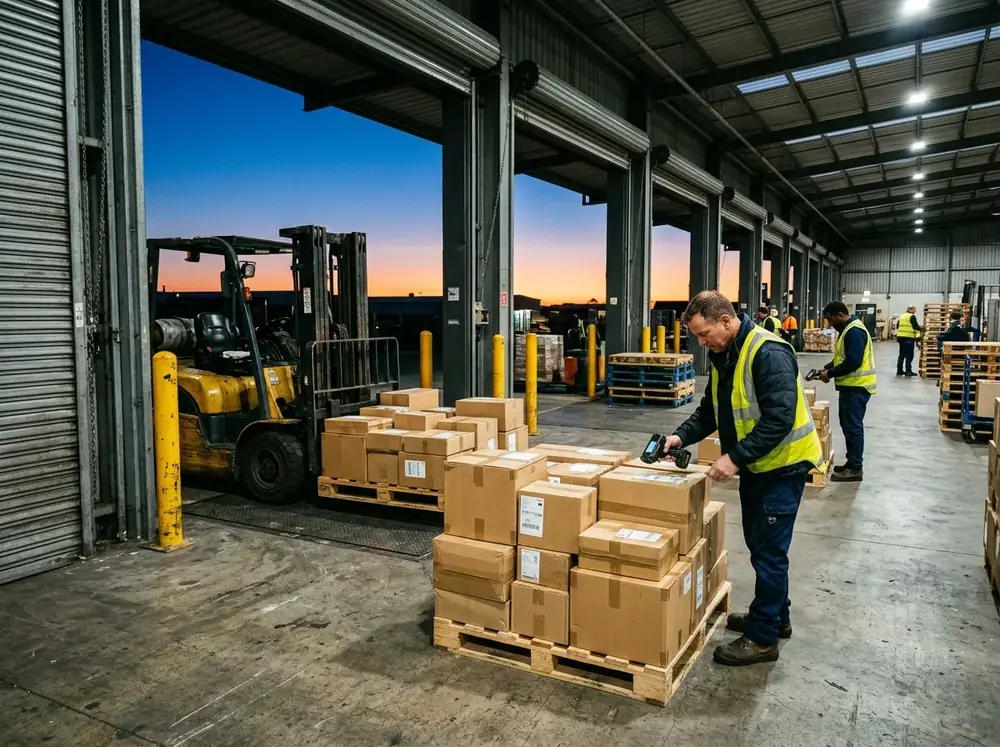
01 Context
Tollmere moves pallets between two docks and 40 carriers. Every inbound scan that did not match its booking became an exception.
Leads walked the floor with a clipboard. Exceptions were logged on paper, retyped at the end of the shift and read the next morning. A short count at 06:00 reached the customer at 15:00. Tollmere asked us for an assessment, not a tool.
02 Process map
We shadowed three shifts. We drew eleven steps. Four of them carried all the delay.
As-is: 6 steps, 1 day. To-be: 5 steps, 12 minutes. Illustrative.
Steps three to five were pure transport. Information moved by hand from a clipboard to a screen to an inbox. We removed the transport and kept the decision.
03 What we built
Two agents, one rule set and a live board. Nothing else.
Intake agent
Reads each scanner event, compares it with the booking and tags the mismatch: short, over, damaged or wrong lane.
Dispatch rules
Routes each exception to the lead on shift. Rules are plain text. Dispatch edits them without us.
Floor board
One screen per dock lists open exceptions, age and owner. Leads close them from the handheld.
As-built file
Steps, rules, owners and failure paths in one document. Tollmere’s own team runs it.
The agent proposes. The lead decides. Any exception tagged damaged waits for a person before a carrier is contacted.
04 Results
Measured over eight weeks after go-live, against a four-week baseline.
-47%Time to clear a dock exception
12 minMedian scan to alert
0Exceptions lost overnight
-9 hrsPer week of retyping
Illustrative figures. Concept case.
The biggest change was not speed. Leads now trust that an exception, once logged, will reach someone with the facts.
What Tollmere says.
Ruth Kessler
Head of Dock Operations, Tollmere Freight

We stopped retyping scanner exceptions. The map alone showed us three steps nobody needed.
05 What’s next
Tollmere is extending the same flow to its second dock and to inbound customs documents.
Next on the plan: a carrier-facing status message drafted from each alert, and a monthly report of exception causes by carrier. Both reuse the rules already in place.
Help
Questions we hear first.
The one that repeats daily, follows rules and wastes the most hours. The assessment ranks your candidates and shows the numbers behind the ranking.
No. Agents handle reading, sorting and drafting. People approve anything that carries risk and handle every exception. Most teams use the freed hours for work they had put off.
No. We connect to the systems you run now, through their APIs or an inbox. If a tool cannot connect, we tell you in the assessment, not in week six.
Every step is logged. Risky steps wait for a person. Failed runs raise an alert with the input, the rule and the reason, so the fix takes minutes.
All of it. The flows, the rules, the prompts and the as-built file. You can run them, change them or hand them to someone else.
Two weeks for the assessment. Four to ten weeks for a build, depending on the number of systems. The quote states the date.
Not here? Ask us on a call.
Book an assessment